The “Chemical Blind Spot”: Why Your Air Quality Agency is Ignoring What’s Falling from Our Skies
By Dan Titus, ACSC, April 4, 2026
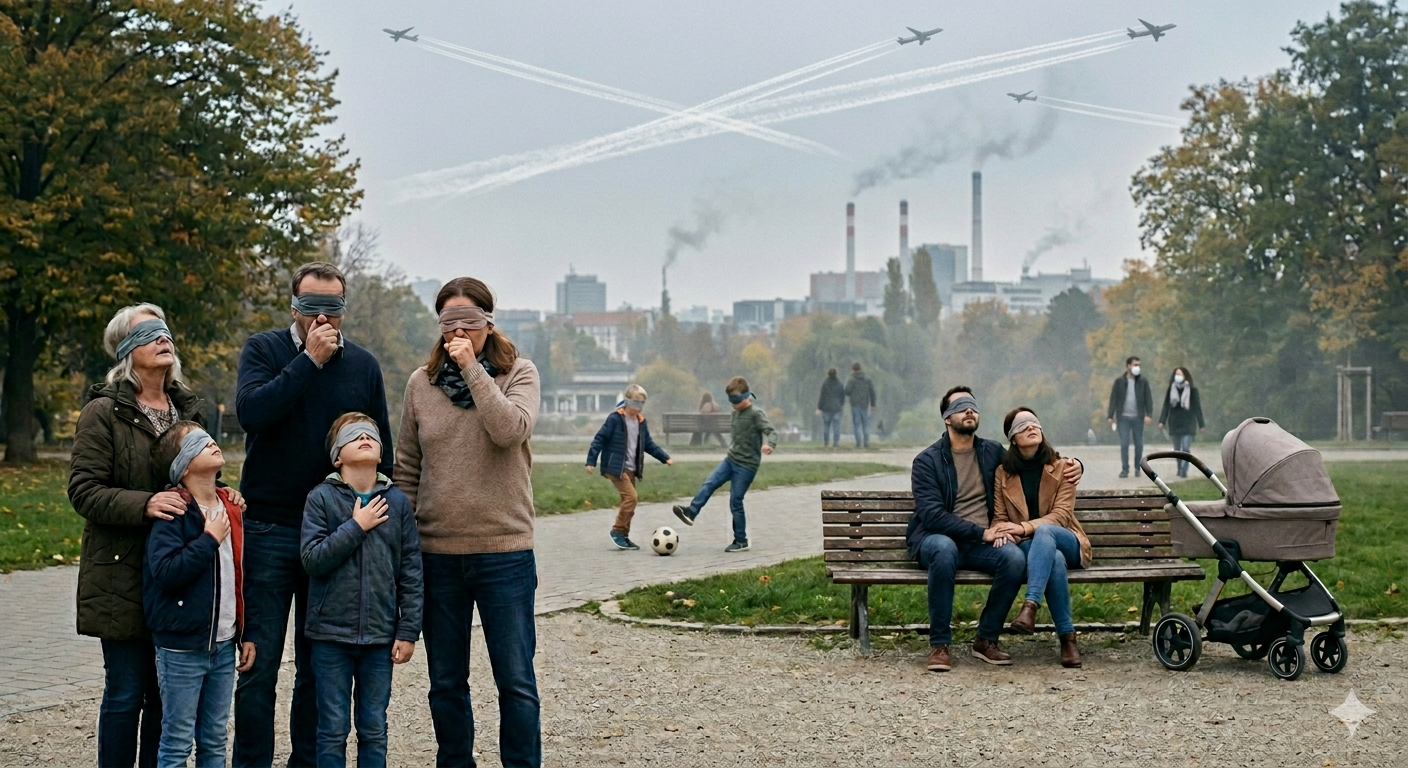
If you live in the Southern California, you don’t need a scientist to tell you the air is thick. By March 2026, we’ve reached a breaking point. Residents are sick, tired, and rightfully angry. But while the South Coast Air Quality Management District (SCAQMD) pats themselves on the back for “monitoring” our air, there is a massive, intentional deception happening right under our noses. It’s called the “Chemical Blind Spot.”
The Grocery Store Scam
Imagine going to the grocery store, putting a bunch of bananas on the scale, and the clerk tells you it weighs 2 pounds—but they refuse to tell you if they’re bananas or toxic waste.
That is exactly how the District monitors your air. Their sensors only measure mass—the total weight of “dust” (PM2.5) in the air. They tell us how much is there, but they intentionally refuse to identify what it is. We call this the Speciation Gap.
The “Aclima” Illusion
The District often points to their fleet of mobile “Aclima” monitoring vehicles (part of the Statewide Mobile Monitoring Initiative, or SMMI) as proof that they are “on the ground” in our neighborhoods. But here is the question we are taking to the Board: What are these trucks actually testing for?
These vans drive through our streets with high-tech scanners, yet the District refuses to confirm if they are configured to identify the metallic and industrial chemicals we breathe. It’s not enough to “drive by”— we need these units to perform actual chemical speciation in real-time.
Watch the Watchers: You can track the data these vans collect via the AQMD Mobile Monitoring Dashboard. If you see a van in your neighborhood, demand to know: Is it testing for Silver Iodide, Aluminum Oxide, and Sulfur Dioxide? Or is it just another “dust-weighting” exercise?
What Are They Hiding?
The The American for Sustainable Communities, (ACSC), has identified three “uninvited guests” in our atmosphere that the District refuses to track at the neighborhood level:
- Silver Iodide (AgI): Used in weather modification.
- Aluminum Oxide: A primary byproduct of atmospheric aerosols.
- Sulfur Dioxide (SO2): A potent respiratory agitator.
From “Oops” to Actionable Negligence
The ACSC filed a Formal Notice of Potential Liability on April 1st. Under California Government Code § 815.6, a government agency is liable if they fail to perform a “mandatory duty.” The District has the laboratory tools for chemical speciation, yet they chose to leave them out of the FY 2026-27 Budget. They now have Actual Knowledge of the risk. If they pass this budget on May 1st without these sensors, they are choosing negligence.
The Domino Effect of Deception
When the SCAQMD refuses to identify the chemicals in our air, they aren’t just protecting themselves—they are blinding our schools districts and water agencies. Our local districts rely on this data to tell us if it’s safe for our kids to play outside. If the data is half-true, the safety is a lie. By accepting the ‘Chemical Blind Spot,’ these agencies are becoming accomplices in a system of negligence that leaves our children and our water supply at risk.
A Global Human Rights Crisis—Right Here at Home
In March 2026, the United Nations Human Rights Council released a landmark report declaring that air pollution—and the failure of governments to monitor it—is a widespread human rights violation. The UN Expert warned that ‘continued inaction is a systemic failure’ and that states are required to act on the evidence they have. The SCAQMD can no longer claim this is just a ‘local technicality.’ By ignoring our ‘Chemical Blind Spot,’ they are now operating in direct opposition to the international standards for human health and dignity.
Are You in the Zone?
If you live in the Inland Empire, the LA Basin, or Orange County, you are under the ‘protection’ of the SCAQMD. From the San Bernardino mountains to the shores of Huntington Beach, your air quality is being managed by a Board that is currently choosing to ignore the chemical signatures of Silver, Aluminum and Sulfur our skies. This isn’t just a San Bernardino problem—it’s a South Coast crisis.
ACT NOW: MAKE YOUR VOICE BE HEARD
- Thursday, April 9th (6:00 PM) – The AB 617 Virtual Meeting We need every resident on this Zoom call. Ask: “Why is the District ignoring the Chemical Blind Spot? Why are our mobile monitoring vans not configured to identify the specific metallic aerosols we are breathing?”
- Zoom Link: https://aqmd.zoomgov.com/j/1608417963
- Meeting ID: 160 841 7963
- Email Comments Early: Send your demand to ab617@aqmd.gov.
- Friday, May 1st (9:00 AM) – The Final Showdown The Board meets in Diamond Bar to sign the budget. We need a physical presence at 21865 Copley Dr. This is the last stand for the 2026-27 budget.
- Webcast: aqmd.gov/home/news-events/webcast
The “Chemical Blind Spot” only exists as long as we allow them to keep the lights off. It’s time to turn them on.
Sources & References:
- California Government Code § 815.6: Liability of Public Entities regarding Mandatory Duty.
- AQMD Mobile Monitoring Dashboard: https://www.aqmd.gov/nav/about/initiatives/environmental-justice/ab617-134/ab-617-community-air-monitoring
- SCAQMD FY 2026-27 Proposed Budget: Goal 1, Objective 2 (Monitoring omissions).
- ACSC 10-Point Report: Submitted to the Clerk of the Board, April 1, 2026.
- Weather Modification in California, Article, April 24, 2025
- UN Report (A/HRC/61/47): Priority actions towards breathing clean air, protecting public health and ensuring a healthy environment (March 2026).